The Feynman technique

Learn deeply by explaining simply

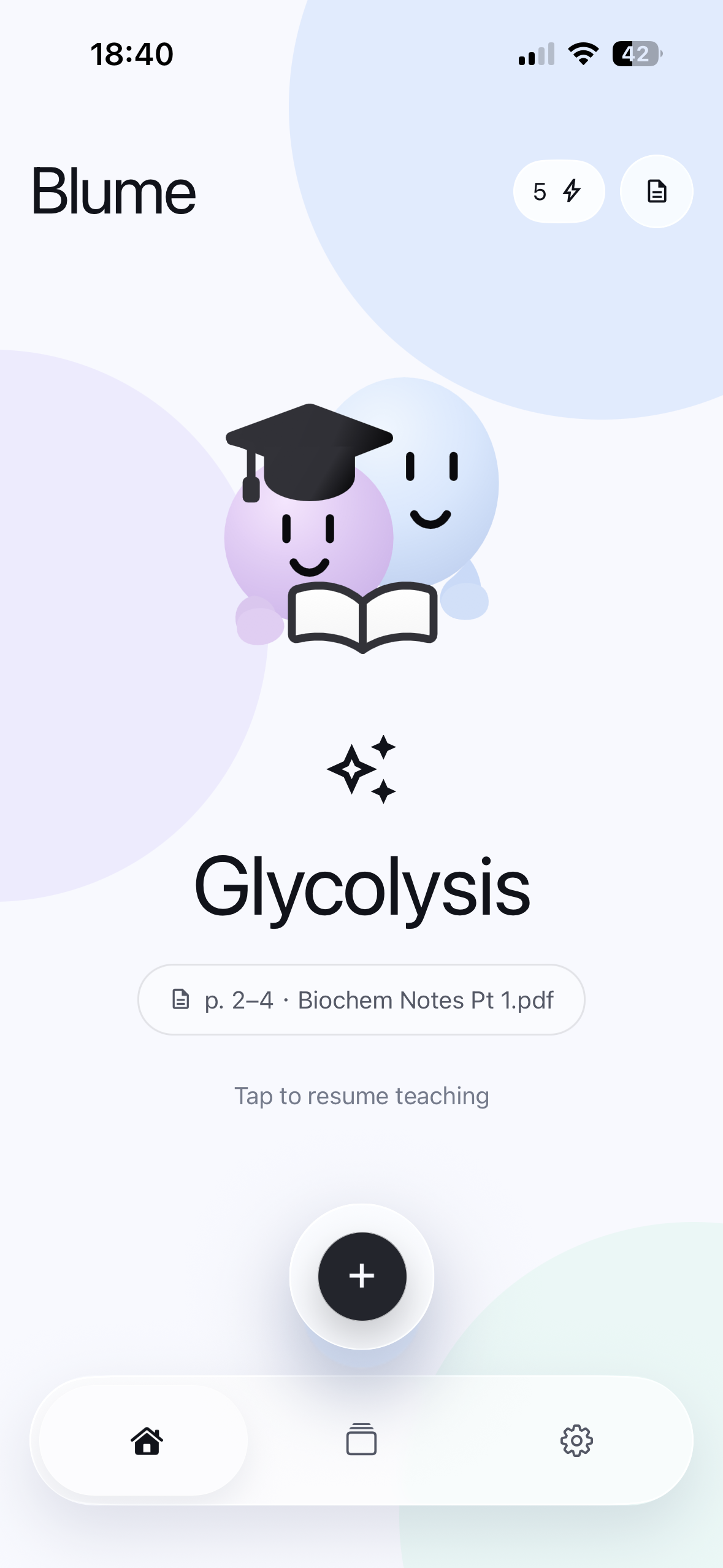
Blume guides you through Richard Feynman's method — teach a concept in plain language, find the gaps, and refine until it's crystal clear.

Core idea

Understanding isn't memorizing — it's being able to teach

Named after physicist Richard Feynman, the technique turns passive review into active explanation. You can't fake clarity when you have to put an idea into your own words.

The four steps

Choose — Select a single concept. Narrow scope beats broad coverage.

Teach — Explain it aloud or in writing, as if to a curious beginner.

Identify gaps — Note every hesitation, jargon slip, or hand-wave.

Review & simplify — Go back to source material, then explain again with fewer words.

What Blume adds

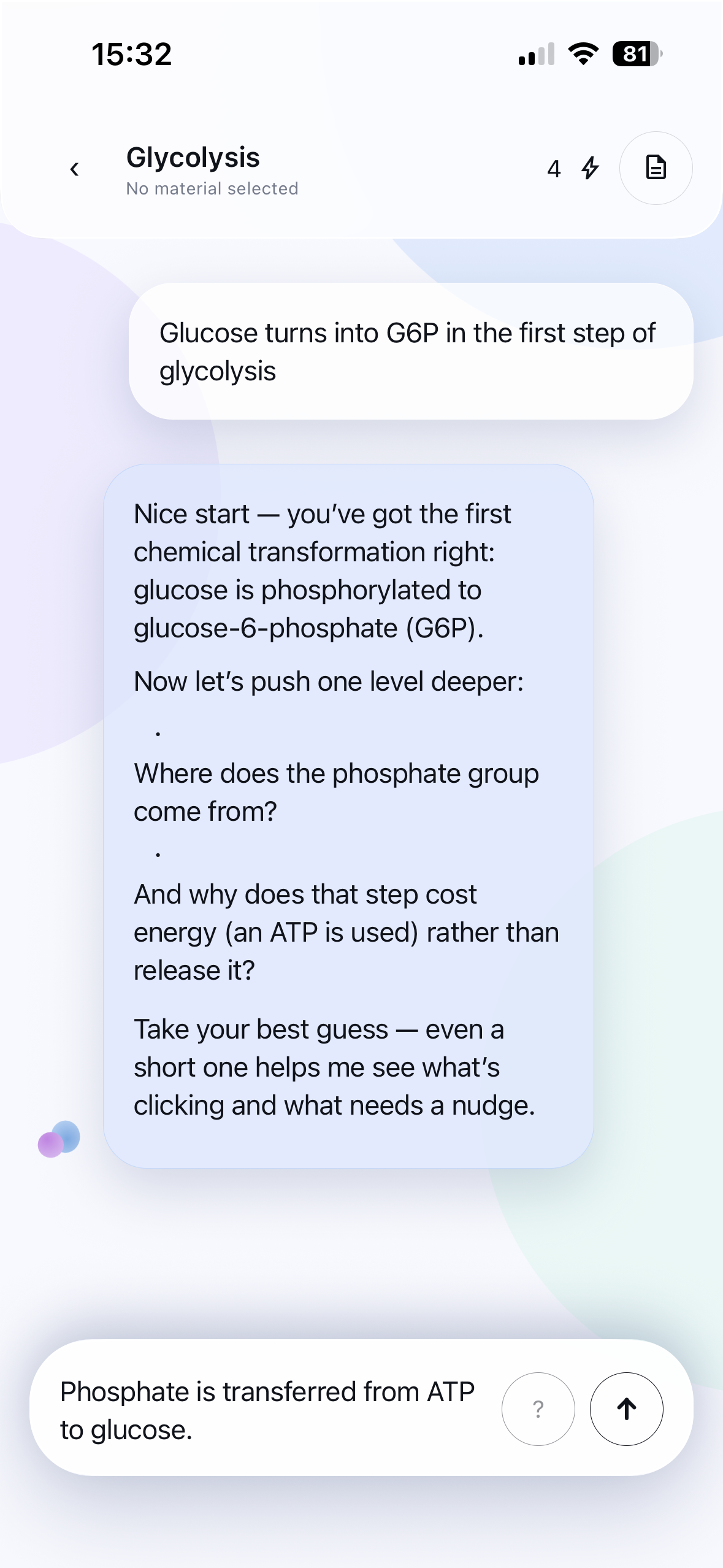
Blume keeps the Feynman loop alive inside a Socratic chat — you explain, the tutor questions your reasoning, and you refine until the idea holds together.

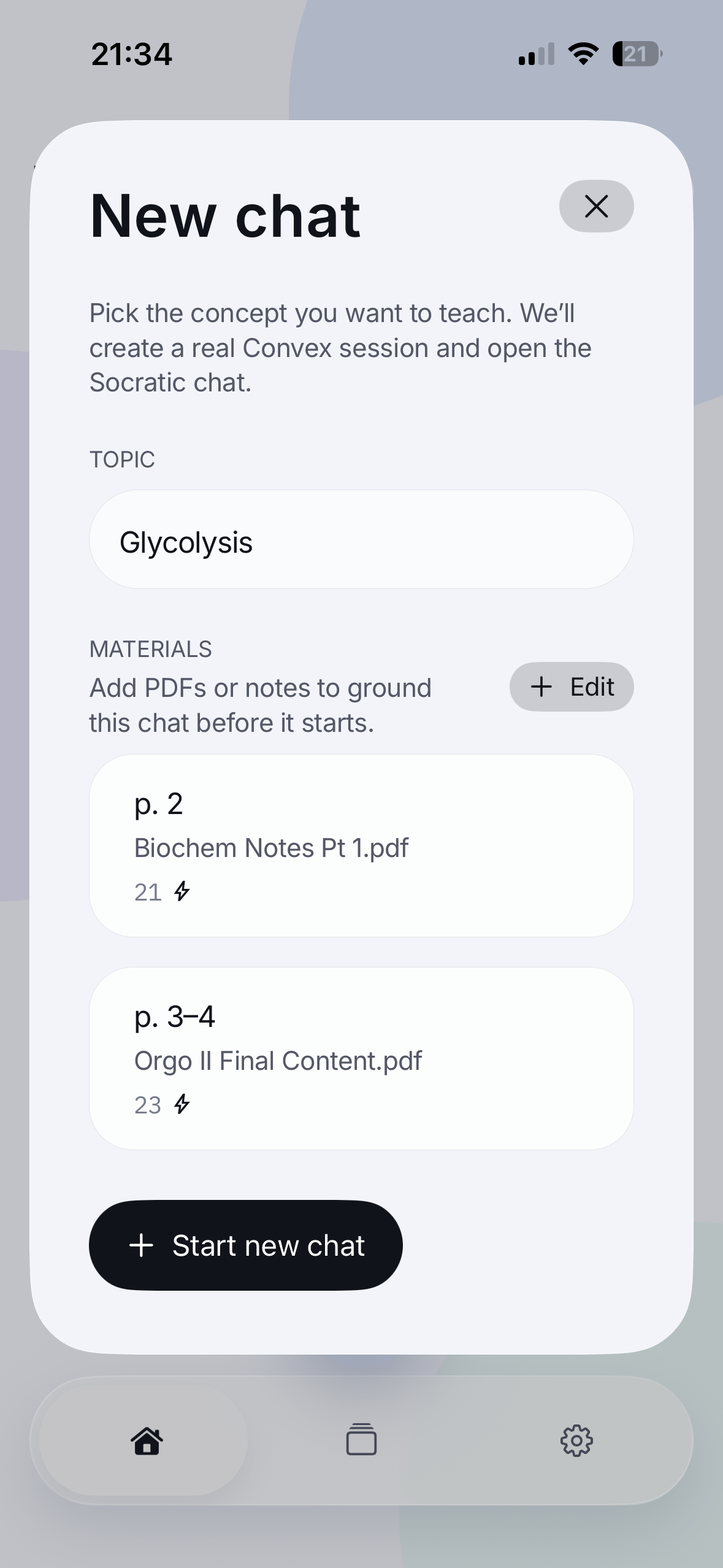
Upload the PDFs and notes you're actually studying, attach them to a session, and get questioned on your coursework — not generic trivia.

Features

Built for the loop, not the highlight reel

Every tool in Blume serves one purpose: helping you explain an idea until you actually understand it.

Socratic tutoring

A tutor that asks you to explain and reason — not a shortcut that hands over final answers.

Your materials, your context

Upload PDFs and text files, pick pages or subtopics, and study from what you are actually working on.

Teaching sessions

Start a topic from the study hub, resume where you left off, and keep each conversation tied to one concept.

Help when you are stuck

Hints and Break Glass escalate support when you need a nudge — without replacing the work of understanding.

Personalized tutor

Adjust tutor personality and reading comfort so sessions fit how you learn.

Built for focused study

Daily Synapses keep sessions intentional. Premium plans expand your allowance for heavier study weeks.

Research

Why explaining works — backed by studies

The Feynman technique sits on a well-studied principle: learning improves when you organize knowledge for someone else.

Score Higher

Participants who expected to teach a passage scored about one standard deviation higher on recall tests than those who expected a test.

Nestojko, J. F., Finn, B., & Mielnicki, M. (2014). Expecting to teach enhances learning and organization of knowledge in free recall of text passages. Journal of Memory and Language, 77, 1–11.
Best Rated Technique

Practice testing and distributed practice received the highest utility ratings among learning techniques reviewed across decades of research.

Dunlosky, J., Rawson, K. A., Marsh, E. J., Nathan, M. J., & Willingham, D. T. (2013). Improving students' learning with effective learning techniques: Promising directions from cognitive and educational psychology. Psychological Science in the Public Interest, 14(1), 4–58.
Understand Deeply

Self-explanation — articulating ideas in your own words — was rated moderate-to-high utility for deepening understanding across subjects.

Dunlosky, J., Rawson, K. A., Marsh, E. J., Nathan, M. J., & Willingham, D. T. (2013). Improving students' learning with effective learning techniques: Promising directions from cognitive and educational psychology. Psychological Science in the Public Interest, 14(1), 4–58.

The mechanism: When you prepare to teach, you organize material into a coherent narrative instead of recognizing isolated facts. Feynman put it simply: "If you can't explain it simply, you don't understand it well enough." Blume makes that standard the default, not the exception.

Explain one concept today

Pick something you're studying right now. Fifteen minutes of honest explanation beats an hour of rereading.

Join the TestFlight beta